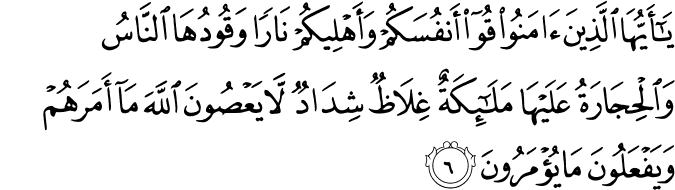
People
nowadays tend to think that da’wah is
not for them due to the misconception of the scope of Islam is limited. They do
not regard da’wah as part of their
life because they do not understand the universal message of Islam. The perception
of Islam as the religion of the Arabs or easterners needs to be vanished from
our mind as Islam is for everyone regardless of their race, nationality or
ethnic background. The most important thing in Islam is the aqidah the faith
that we have. A Muslim means one who submits to the will of God while being a
Muslim entails wilful submission and active obedience to God, and living in
accordance with His message. The wrong perception mentioned above have been
proved wrong since we can see in the world today that about 80% of Muslim
population are not Arabs and even the population of Muslims in Indonesia is
more than in the whole Arab World. It is important to preach and give the
correct understanding of universal message in Islam towards children and youth
since we do not want them to have the wrong understanding.
In
addition, children and youth need to be emphasized on the meaning of ‘deen’ as
it is our way of life. If this concept is applied to everyone, the universal
message of Islam will be delivered to the people easily. There is no more gap in applying Islamic teaching in
every activities as people are already know that Islam is in everything.
Starting from wake up in the morning until we will sleep at night, everything
we do is being taught is Islam. Understanding the divine message will make us
understand religion better. When we understand something, we will not question
back why we should do it.
When we
understand the divine message by God, we must follow the system that we are in.
Every system has its own rules and principle. This analogy should also be
implemented in Islam. In Islam, it is not enough to just know the Islam. As
stated by M. Solihin,
Sohirin (2008) in his book, Islamic Da’wah,
“The work of da’wah is to educate others with the
divine message; education represents the most vital instruments of da’wah.
Islam as the divine message has the system of the Shari’ah with broader scope
that needs to be exposed to students. It is also worth explaining about the
relevance of the Shari’ah which was developed since the days of Prophet
Muhammad and his companions with the contemporary global issues.”
As the Shari’ah is the whole set of Islamic law,
muslims must get the proper vision of the relation between Shari’ah and fiqh. Usul
al-fiqh, or the roots of Islamic law, expounds the indications and methods by
which the rules of fiqh are deduced from their sources. These indications are
found mainly in the Qur'an and Sunnah, which are the principal sources of the
Shari'ah. The rules of fiqh are thus derived from the Qur'an and Sunnah in conformity
with a body of principles and methods which are collectively known as usul
al-fiqh. To say that usul al-fiqh is the science of the sources and methodology
of the law is accurate in the sense that the Qur’an and Sunnah constitute the sources
as well as the subject matter to which the methodology of usul al-fiqh is
applied. The Qur’an and Sunnah themselves, however, contain very little by way
of methodology, but rather provide the indications from which the rules of
Shari’ah can be deduced. The methodology of usul al-fiqh really refers to
methods of reasoning such as analogy (qiyas), juristic preference (istihsan),
presumption of continuity (istishab) and the rules of interpretation and
deduction. These are designed to serve as an aid to the correct understanding
of the sources and ijtihad.
In
spreading da’wah to children and youth, it is important for us to make them
understand these elements, which are universal message of Islam and Islamic
jurisprudence. When they about the whole set of the Islamic law, they also have
to know how to put the Shari’a into the practice. Thus, the fiqh which needs to
be taught to the children and youth is highly related to the practical system
of daily ritual services which ‘ibadah as contained in the five pillars of
Islam. Other than that, they also need to be exposed to the basic understanding
of views of emergence four schools of thought in Islamic jurisprudence so that
they will confuse later as by the end of the eleventh century four schools of
Islamic jurisprudence emerged, each named after its leading interpreter:
Maliki, Shafii, Hanafi and Hanbali. So, in da’wah, we need to bear in mind that
we have to make sure these children and youth are able to perform the ‘ibadah
with the correct and proper knowledge as practical of ritual without knowledge
is useless just like the the tree without fruits.